
Michael Stern, conductor
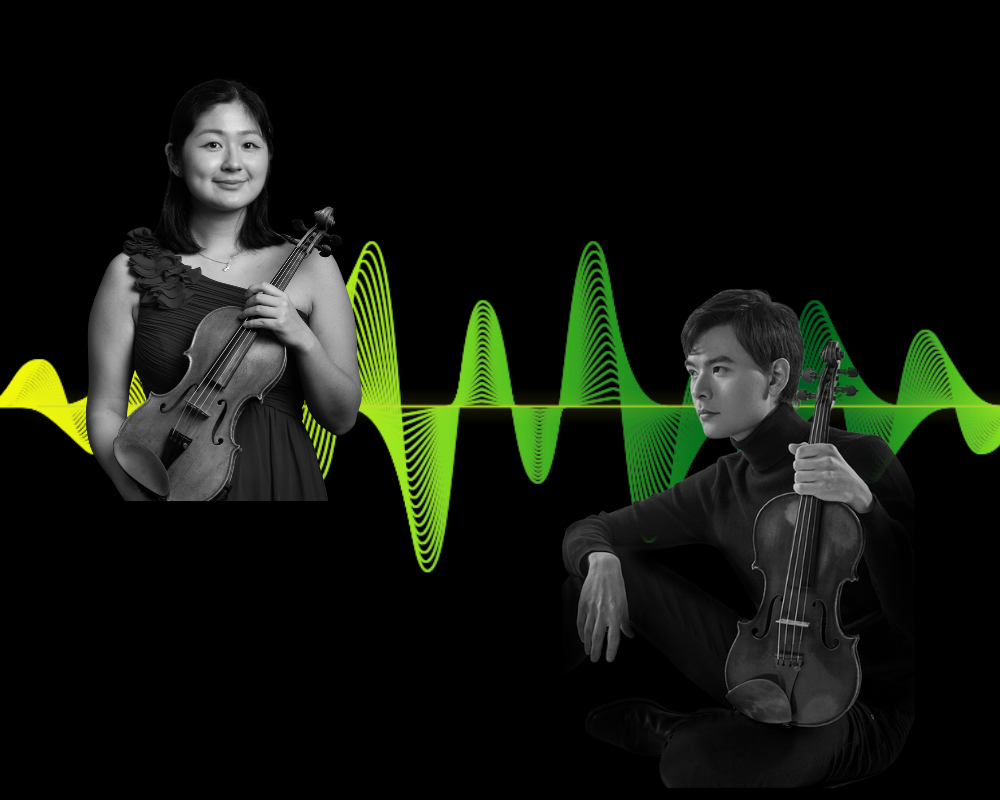
Stefan Jackiw, violin
Ashley Yoon, violin, INTEMPO Artist-in-Residence
Full Orchestra
Palace Series
Sibelius & Schumann:
Paying it Forward
Saturday, October 24, 2026 at 7:30pm
Sunday, October 25, 2026 at 3:00pm
J.S. Bach Concerto for Two Violins
Jean Sibelius Violin Concerto
Robert Schumann Symphony No. 3, “Rhenish”
Music Director Michael Stern and the full orchestra are joined by violinists Stefan Jackiw and Ashley Yoon. On the program: J.S. Bach Concerto for Two Violins; Jean Sibelius Violin Concerto; and Robert Schumann Symphony No. 3, “Rhenish.”
Duration: 2 hours with a 20 minute intermission
Saturday, October 24, 2026 at 7:30pm | The Palace Theatre, Stamford
Sunday, October 25, 2026 at 3:00pm | The Palace Theatre, Stamford
Join us for illuminating discussions hosted before and after concerts.
Behind the Baton: Held in the upstairs lobby of the Palace Theater 30 minutes prior to each concert. Learn more about the program with Music Director Michael Stern. This pre-concert talk offers a deeper look into the music and introduces you to the soloists.
After Hours: Held in the lower lobby café following Saturday evening concerts. Michael Stern moderates an interactive discussion after the concert with a panel of guest musicians. Join us for a glass of wine and feel free to ask questions and share your own thoughts!
Kids come free on Sundays!
Orchestra Lumos is broadening access to, and appreciation of, musical experiences for young audiences. Children aged 5-17 come FREE with an accompanying adult for the Sunday afternoon concert.
Featured artists:
Stefan Jackiw, violin
Stefan Jackiw, violin

Stefan Jackiw is one of America’s foremost violinists, captivating audiences with playing that combines poetry and purity with impeccable technique. Hailed for playing of “uncommon musical substance” that is “striking for its intelligence and sensitivity” (Boston Globe), Jackiw has appeared as a soloist with the Boston, Chicago, Cleveland, New York, Philadelphia, and San Francisco symphony orchestras, among others.
In the 2025–26 season, Stefan Jackiw returns to the Pittsburgh Symphony for Korngold’s Concerto, the Baltimore Symphony for Beethoven’s Triple Concerto alongside Inon Barnatan and Hayoung Choi, conducted by Jonathan Heyward, and the Indianapolis Symphony for Berg’s Violin Concerto. He launches the Austin Symphony’s season with Prokofiev’s Violin Concerto No. 2, which he also performs later with the Vancouver Symphony. Jackiw joins the Seoul Philharmonic and Mei-Ann Chen for Bruch’s Scottish Fantasy. In winter 2026, he opens the Laguna Beach Music Festival with three consecutive concerts featuring a varied repertoire, including Janáček’s Kreutzer Sonata. He also performs Dvořák’s Concerto with the Kansas City Symphony.
Jackiw is set to make his debut at London’s iconic Southbank Centre in a highly anticipated special trio project with cellist Alisa Weilerstein and pianist Inon Barnatan. He continues touring with Junction Trio with engagements at Chamber Music Sedona, Sanford-Hill Piano Series, Noe Music, Caramoor, Jacksonville Symphony, and additional dates to be announced. As a recitalist, he returns to Montclair State University, Denver Friends of Chamber Music, Harvard University, Friends of Music Sleepy Hollow, and The Rockefeller University, with additional performances to be announced.
Jackiw’s 2024-25 season highlights include performances with the Cleveland Orchestra under Santtu-Matias Rouvali, National Symphony Orchestra of Ireland, Suwon Philharmonic, Pasadena Symphony, The Florida Orchestra, Erie Philharmonic and the Jacksonville Symphony. He continued touring with Junction Trio, returning to the 92NY stage with a program including the world premiere of a new work by John Zorn and performing at Rockefeller University.
Jackiw opened his 2023-24 season returning to the New York Philharmonic to perform the Barber Concerto with Jaap van Zweden. His season also included a quadruple World Premiere of new works at Roulette, performances with the Taiwan Philharmonic, China National Symphony, and the Junction Trio’s highly praised debut at Carnegie Hall.
Jackiw tours frequently with his musical partners, pianist Conrad Tao and cellist Jay Campbell, as part of the Junction Trio. In 2021, Jackiw performed a new Violin concerto, written for him by Conrad Tao and premiered by the Atlanta Symphony and Baltimore Symphony. He also enjoys collaborating with pianist Jeremy Denk with whom he recorded the complete Ives Violin Sonatas on Nonesuch Records. The album was universally lauded by critics, with The New Yorker’s Alex Ross naming Jackiw’s performance “a new standard.” In 2019, he recorded Beethoven’s Triple Concerto with Inon Barnatan, Alisa Weilerstein, Alan Gilbert and Academy St. Martin in the Fields. He has also premiered David Fulmer’s concerto Jauchzende Bögen with Matthias Pintscher and the Deutsche Kammerphilharmonie Bremen at the Heidelberger Frühling.
Jackiw has performed in numerous major festivals and concert halls around the world, including the Aspen Music Festival, Ravinia Festival, Caramoor International Music Festival, Schleswig-Holstein Music Festival, Lincoln Center’s Summer for the City Festival, the Philharmonie de Paris, Amsterdam’s Concertgebouw, the Celebrity Series of Boston, and the Washington Performing Arts Society.
Born to physicist parents of Korean and Ukrainian descent, Stefan Jackiw began playing the violin at the age of four. His teachers have included Zinaida Gilels, Michèle Auclair, and Donald Weilerstein. He holds a Bachelor of Arts from Harvard University, as well as an Artist Diploma from the New England Conservatory, and is the recipient of a prestigious Avery Fisher Career Grant. Jackiw plays a violin made by Domenico Montagnana “ex. Rossi” c. 1730, generously loaned by a private foundation. He lives in New York City.
Photo credit: Diego Redel
Ashley Yoon, violin
Ashley Yoon, violin

Ashley Yoon is a 22-year-old violinist and passionate chamber musician from Charleston, South Carolina. She is a recent graduate of The Juilliard School, where she studied with Joseph Lin for her bachelor’s degree as a recipient of the C.V. Starr and Malino Scholarships. She is currently studying with Soovin Kim at the Yale School of Music for her master’s degree. She serves as Artist-in-Residence at INTEMPO, a music education nonprofit based in Stamford, CT.
Ashley was recently a fellow for the Bowdoin International Music Festival’s Fellowship Program in 2025. She was a fellow at the Norfolk Chamber Music Festival during the summers of 2024 and 2023. She is currently an active member of Charles Neidich’s WA Sinfonietta chamber orchestra as part of the Artena Foundation. She has recently served as the concertmaster of the Shepherd School Symphony, conducted by Jerry Hou, and for Yale’s Chorale Week. Her sextet had the honor of performing Brahms’ Sextet multiple times at the MET Museum through Juilliard. She won the American Protégé International Competition of Romantic Music and was invited to play at Carnegie Hall in December 2019. Ashley is also a winner of the DSO Concerto Competition and has had the opportunity to perform the Saint-Saëns Violin Concerto with the Dekalb Symphony Orchestra.
Outside of performing, Ashley has a deep interest in human rights, law, and writing, and hopes to curate a melding of these worlds. During her time at Juilliard, she served as the group leader for both the Gluck Community Engagement Fellowship and Hire Juilliard Performers, engaging with underserved communities in New York City and with clients such as Rémy Martin Cognac and a Grammy-winning artist.
Michael Stern, conductor, The Parrish Chair
Michael Stern, conductor, The Parrish Chair
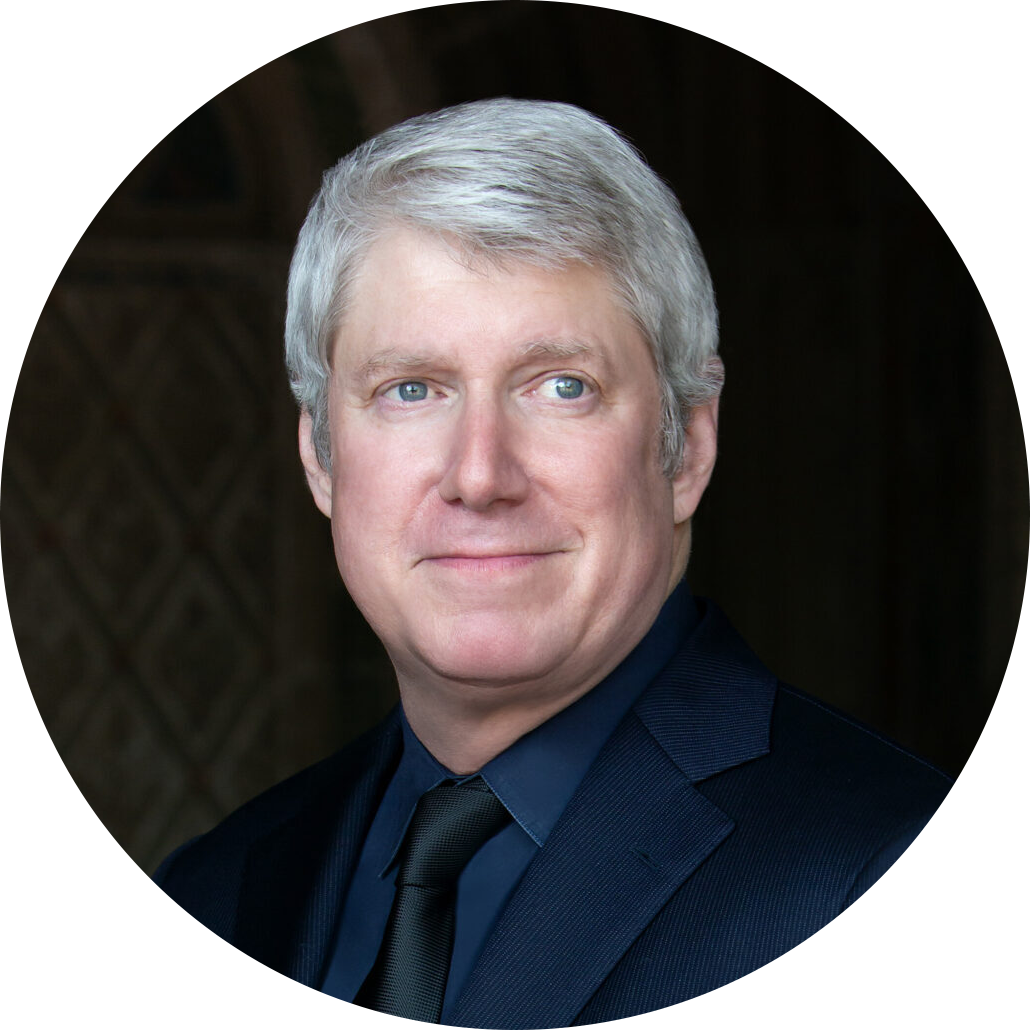
Conductor Michael Stern has long been devoted to building and leading highly acclaimed orchestras known not only for their impeccable musicianship and creative programming, but also for collaborative, sustainable cultures that often include a vision of music as service to the community. He is passionate about working with young musicians not only in music making, but also to incorporate the idea of “service” into their experiences as they become the artists and advocates of the future who will take classical music into the 21st century and beyond.
Stern is Music Director of Orchestra Lumos (formerly Stamford Symphony) and the National Repertory Orchestra, a unique fellowship program for aspiring young musicians, and whose alumni populate every major orchestra across the United States. He is Music Director Emeritus of the Kansas City Symphony where he just concluded his 19-year tenure and is Artistic Advisor of Iris Orchestra in Germantown, Tennessee.
During Stern’s acclaimed tenure with the Kansas City Symphony, he and the orchestra were recognized for their remarkable artistic ascent, original programming, organizational development, stability, and extraordinary audience growth. The orchestra explored a wide range of repertoire and commissioned a number of new works and partnered with GRAMMY® Award-winning Reference Recordings for a collection of acclaimed recordings that includes commissions by American composers Adam Schoenberg and Jonathan Leshnoff as well as Gustav Holst’s The Planets, and works by Elgar, Vaughan Williams, Hindemith, Prokofiev, Bartok and more.
Stern co-founded Iris Orchestra in 2000 and was Founding Artistic Director and Principal Conductor until 2021-22, when he had planned to step down from his post. With his departure, staff, community and musicians joined together to reinvent the orchestra as the Iris Collective, devising a new way for a 21st-century organization to offer a spectrum of events, from chamber music and smaller ensemble programs to full orchestral performances, teaming up with a number of creative partners, including Stern who continues his involvement as Artistic Advisor.
North American conducting engagements for Stern have included the orchestras of Boston, Chicago, Cleveland, Philadelphia, and the National Symphony. He debuted with the New York Philharmonic in 1986 in a program titled, “Leonard Bernstein and Three Young America Conductors” and has conducted them several times since. Internationally he has led major orchestras in London, Stockholm, Paris, Helsinki, Budapest, Seoul, Israel, Moscow, Taiwan, and Tokyo. Stern has been Chief Conductor of Germany’s Saarbrücken Radio Symphony Orchestra, Principal Guest Conductor of the Orchestre National de Lyon in France, and Principal Guest Conductor of the Orchestre National de Lille, France.
Stern received his music degree from the Curtis Institute of Music in Philadelphia and is a 1981 graduate of Harvard University.
Program notes:
CONCERTO FOR TWO VIOLINS IN D MINOR, BWV 1043
CONCERTO FOR TWO VIOLINS IN D MINOR, BWV 1043 | Johann Sebastian Bach (1685-1750)
First performance: 1730, Leipzig, Collegium Musicum | Orchestra Lumos Premiere and most recent performance: October 2021
VIOLIN CONCERTO IN D MINOR, OP. 47
VIOLIN CONCERTO IN D MINOR, OP. 47 | Jean Sibelius (1865-1957)
World Premiere: 1904, Helsinki Philharmonic Orchestra, Viktor Nováček, violin | Orchestra Lumos Premiere and most recent performance: November 2014
The compositions of Jean Sibelius constitute a case study in the capriciousness of musical taste and the power of the artistic avant-garde. Pigeonholed by many as primarily a Finnish nationalist, whose dark, remote music was a shallow representative of Romanticism’s last gasps, Sibelius was nevertheless deemed the champion of American and British conservative musical tastes between the world wars. Typical was Olin Downes, music critic of the Times, whose relentless public support of Sibelius bordered on sycophancy. Likewise, Koussevitsky, conductor of the Boston Symphony Orchestra, programmed a cycle of Sibelius’s symphonies, and dogged the composer to finish the eighth—which he never did. But, those who favored the avant-garde of Stravinsky, Schönberg, and company—and that included most of continental Europe and American intellectuals—were scathing in their contempt. One respected and well-known critic entitled an essay about Sibelius, “The Worst Composer in the World.” These controversies, and Sibelius’s life-long struggle with alcoholism and depression no doubt played a signal part in his composing nothing of significance from the nineteen thirties until his death in 1957 at the age of 91.
But tastes change, and the current crop of composers and scholars now take a more balanced view of Sibelius’s compositions. His seven symphonies enjoy renewed respect, although the ever-popular Symphony No.2 has long been a repertory standard, and–other than the evergreen Finlandia—is his most popular work. It is not incorrect, of course, to recognize the deeply informing rôle of nationalist Finnish elements in his music style. He consciously and assiduously studied and absorbed the musical and literary heritage of the Finnish culture and adroitly folded them into a unique personal statement. He was completely taken by the Finnish national epic, the Kalevala, and early on his musical style reflected these cultural elements, from his melodic choices to the stories behind his tone poems. His symphonies are large soundscapes that surge and ebb, whose melodies often appear first as small kernels of a few notes whose significance is easily overlooked. But, as the music unfolds and these bits of melody appear in a kaleidoscope of identities, they meld together into great torrents of themes. Sibelius was a master of orchestration, and most listeners easily accept the inevitable comparisons to the bleak, cold, primæval landscapes of Finland.
Sibelius’ violin concerto has certainly stood the test of time, and is one of his most-performed works, as well as being one of the most important violin concertos in the repertoire. It was composed in the period of his first two symphonies, and was first performed in 1904 in Helsinki (the performance was essentially a disaster—the violinist was not up to the task.) In some ways, the piece would seem to be a contradiction. On the one hand it is infused with his signature dark, cold Nordic textures that seem to float impersonally over human trivialities. Yet, on the other, concertos by their very natures are often showpieces for a very real, single human being who plays musical material conceived to express that individuality. Well! Pulling these disparate elements together would certainly seem a challenge, but Sibelius, on the whole succeeds quite well. After the ill-fated first performance he spent some time revising, and the concerto was performed to great acclaim in Berlin in 1905, with Richard Strauss conducting.
Several points are recommended to the listener. First, and it is rather evident, this concerto is really difficult! Sibelius began as a violinist, and with a player’s grasp of the violin’s capabilities, he laid down formidable technical challenges to the performer. Replete with double stops of all varieties (listen especially for the octave double stops at the end of the first movement), quick jumps from first to seventh position, and broken chords at very fast tempos, it is virtually a compendium of every difficult thing a composer might ask of a virtuoso violinist. Especially impressive in the first movement is the passage wherein two of the soloist’s fingers execute a trill while the remaining two digits finger a melody on another string. The last movement has its impressive challenges, as well. An innovation is the long and important solo cadenza in the middle of the first movement that essentially functions as the development section. Relief from dark moods and textures, and brilliant technical challenges is found in the lyrical middle movement. Throughout the concerto be aware of the impressive imagination exhibited by Sibelius in his creation of almost unique tonal colors through an imaginative scoring for the orchestra.
Sibelius carved out for himself a solitary position in the musical world between late Romanticism and the severe aesthetics of a new century. It placed him in a difficult position with the purists of most camps, but his life’s work now is gradually gaining in stature as a serious reconsideration of his oeuvre continues.
–Wm. E. Runyan
© 2015 William E. Runyan
SYMPHONY NO. 3 IN E-flat MAJOR, OP. 97 (“RHENISH”)
SYMPHONY NO. 3 IN E-flat MAJOR, OP. 97 (“RHENISH”) | Robert Schumann (1810-1856)
First Performance: 1851, Düsseldorf Symphony | Orchestra Orchestra Lumos Premiere: April 1989 | Most recent Orchestra Lumos performance: March 2018
Schumann composed in almost all of the common genres, and notwithstanding his success in the larger forms, did perhaps his most respected work in song and piano literature. Known—at least during his lifetime—almost as much for his distinguished career as music critic and essayist, even today his analyses and commentaries lend valuable insights into the music of his milieu and times. He was a formidable pianist—his wife, Clara, even more so—and his contributions to the piano stand with those of Schubert, Chopin, and Brahms in artistic significance.
Schumann was a Romantic to the core, yet, withal, he had great respect for clarity, balance, and formal integrity so characteristic of the music of Classicism. It must be admitted, however, that to some degree his deep passions and emotional self-indulgences can be seen as aspects of a personality that ultimately broke down in the psychoses and pathologies that led to his early death in an institution. He was happy early on, however, and the years of his early marriage brought forth masterworks in spates, as his mind focused extraordinarily in narrow directions. Up to the time of his marriage to Clara he had composed exclusively music for the piano, a great corpus of work that is one of the century’s important contributions to the literature for the instrument. But the joy and exuberance upon his marriage in1840 led to a remarkable outpouring of songs—some 125 in that year alone.
Nevertheless, Schumann made important contributions to chamber and symphonic music, and his four symphonies are respected contributions to orchestral literature. He turned his talents to the genre—at Clara’s enthusiastic encouragement–the very next year after the remarkable production of Lieder in 1840. His first two symphonies—No. 1 in Bb Major “Spring” and No. 4 in D Minor (it’s complicated—don’t ask) were the result, and the first is an especially exuberant celebration of the joy and optimism of that period—not at all prescient of the dark and tragic end to his life. The third work did not appear until about five years later—all three composed while he and Clara were living in Leipzig. In 1850 they removed to Düsseldorf, a short distance down the Rhine from Cologne, where he took over leadership of important musical posts, to considerable acclaim and popularity. He had been there less than a month, when he visited the magnificent, imposing cathedral of Cologne—the putative inspiration for Symphony No. 3 in Eb Major, composed in November and early December, later that fall. More specifically, a subsequent visit in early November, the time of the elevation of the Archbishop of Cologne to cardinal, inspired the ecclesiastical solemnity of the fourth movement of the symphony. That movement is an added movement before the last movement, giving five movements in all—not that unusual, given Beethoven’s example in his sixth symphony, as well as Berlioz’ Symphonie fantastique.
The first movement is an energetic, effusive celebration of the Rhine River and the cathedral with a leaping, syncopated main theme that propels the whole movement. The horns, especially, inform the atmosphere with a heroic quality so associated with the works of Richard Strauss some forty years later. The gentle, undulating main section of the second movement is clearly an evocation of the flowing river. This is the traditional “dance” or scherzo movement of most symphonies, but here, takes the character of a gentle German Ländler. Schumann, being Schumann, can’t resist later taking the mood to a more forceful atmosphere, replete with the “heroic” horns, but it all ends peacefully. The third movement provides a serene interlude that reminds us of the nuance and subtle beauty of so many of Schumann’s Lieder. Harmonic richness and melodic invention beguile us, as the parade of winsome melodies pass before us. In a creative touch of unification, Schumann makes constant use of a little four-note chromatic ascending scale that connects the melodic passages and ties it all together–that idea getting the last word.
The interpolated fourth movement is perhaps the signature movement of the symphony, inspired by the Archbishop’s elevation. Schumann marked it as “in the character of a procession for a solemn ceremony.” That it is, and it begins with a chorale-like passage in the trombones and horns that majestically ascends into the sonic stratosphere—trombones, of course, evoking their long association with the church. The floating “solemn” harmonies are borne by the lower instruments that provide the “processional steps.” The soaring main theme pervades throughout, with sections treated contrapuntally in the best ecclesiastic tradition. The Rhine River may be the central metaphor of the symphony, but the majestic Cologne cathedral is the spiritual focus, here.
The last movement is a spirited romp, with two dancing themes that cascade towards the conclusion. A stately pronouncement from the brass section briefly interrupts the dash to the end, and Schumann’s cheerful trip up the Rhine to Cologne joyfully concludes. The sad dementia that ultimately ended his life is thankfully little in evidence in this, one of his happiest times.
–Wm. E. Runyan
© 2018 William E. Runyan
*artists and programs subject to change